Convergence
Design
Lab

About Our Lab

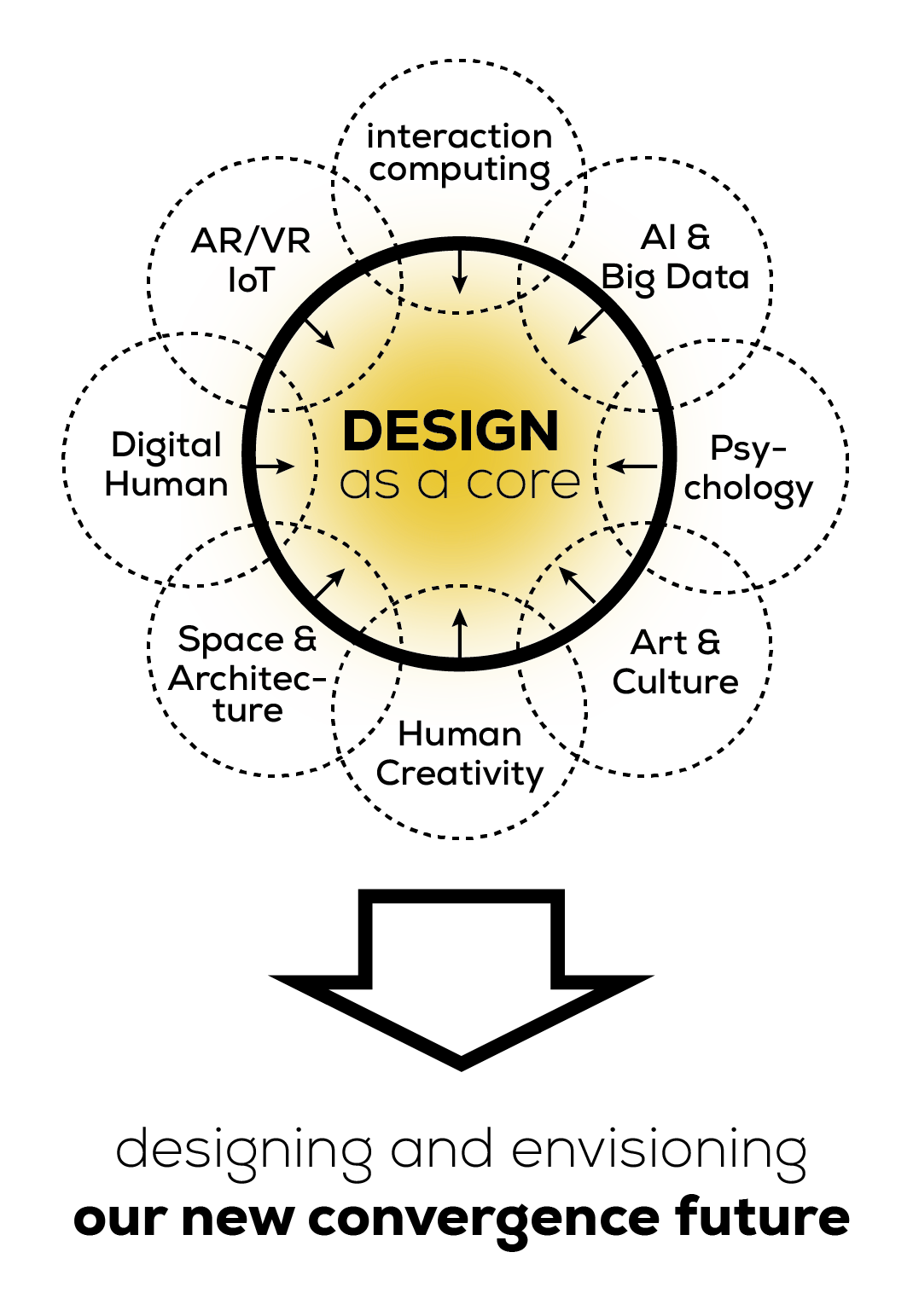
Digital technologies and media have been deeply embedded in our daily lives, and blur the boundary between our physical lives of atoms and digital ones of bits. Consequently, ‘how to converge these two worlds in a more seamless and innovative way’ has become a hot topic in various industries, such as smart environments, robots, education, art, media, or games.

Our lab envisions this new reality through various designary and multi-disciplinary approaches. Through iterative user-centered processes, we design new products, interactions, services, and systems that could bring new experiences to various convergence domains (e.g., embodied art, smart home, immersive environments, metaverse contents, design toolkits, spatial marketing, digital human, augmented experience, digital architecture, etc.).
→ learn more about our lab
Img

RECENT PROJECTS
Maecenas faucibus mollis interdum. Morbi leo risus, porta ac consectetur ac, vestibulum at eros. Fusce dapibus, tellus ac cursus commodo, tortor mauris condimentum nibh, ut fermentum massa justo sit amet risus.
Generative design for COVID-19 and future pathogens using stochastic multi-agent simulation
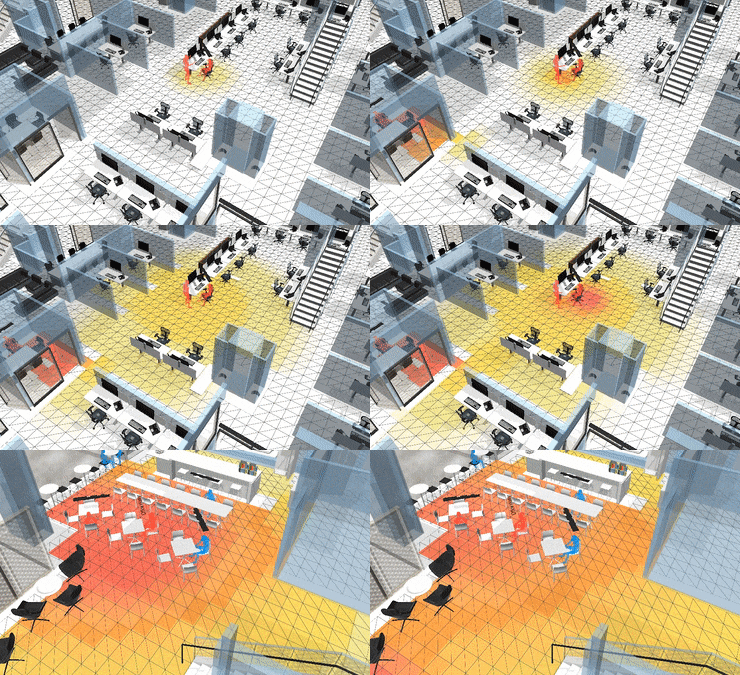
We propose a generative design workflow that integrates a stochastic multi-agent simulation with the intent of helping building designers reduce the risk posed by COVID-19 and future pathogens.
Designing a Multi-Agent Occupant Simulation System To Support Facility Planning And Analysis For COVID-19
We propose OccSim, a system that automatically generates occupancy behaviours in a 3D model of a building and helps users analyze the potential effect of virus transmission from a large-scale and longitudinal perspective.
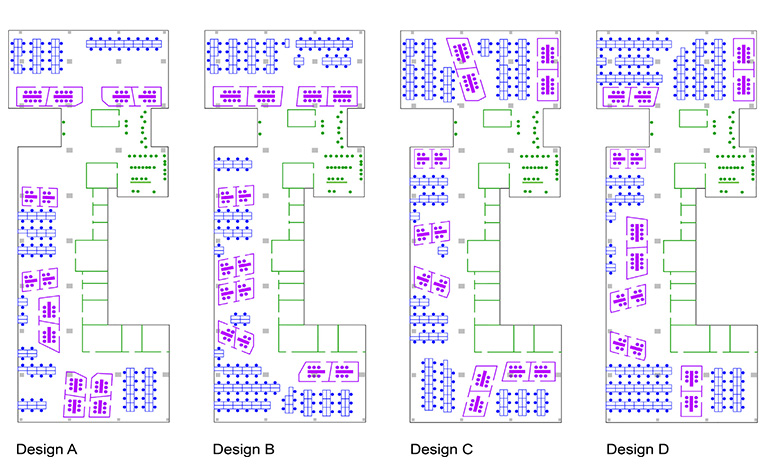
An Empirical Study of How Socio-Spatial Formations are influenced by Interior Elements and Displays in an Office Context
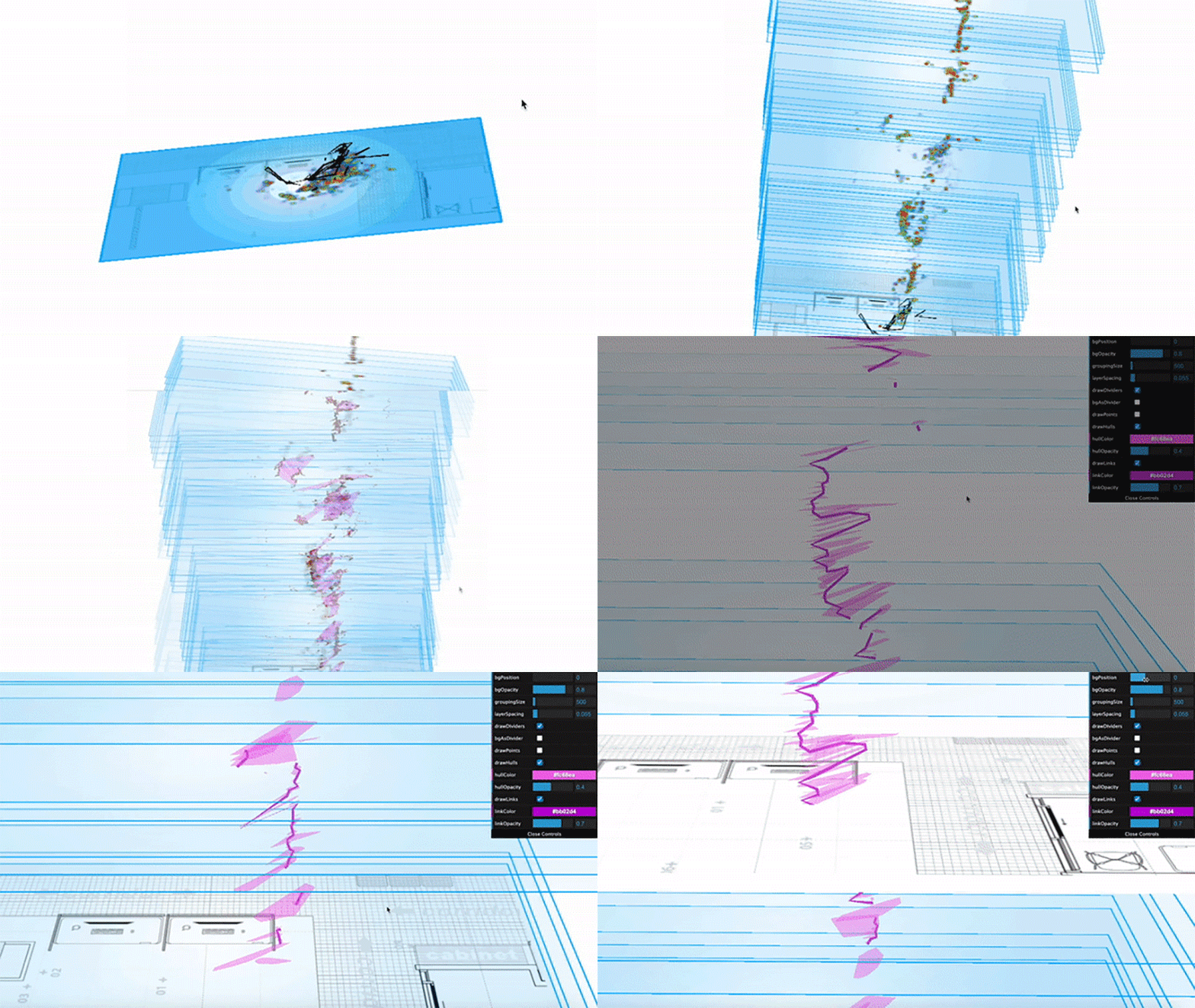
To better understand how workplace design shapes social interactions, we ran an empirical study in an office context over a two week period. Based on the data, we discuss dynamics of socio-spatial formations and how this knowledge can support social interactions in the domain of space design systems and interactive interiors.
Socio-Spatial Comfort: Using Vision-based Analysis to Inform User-Centred Human-Building Interactions
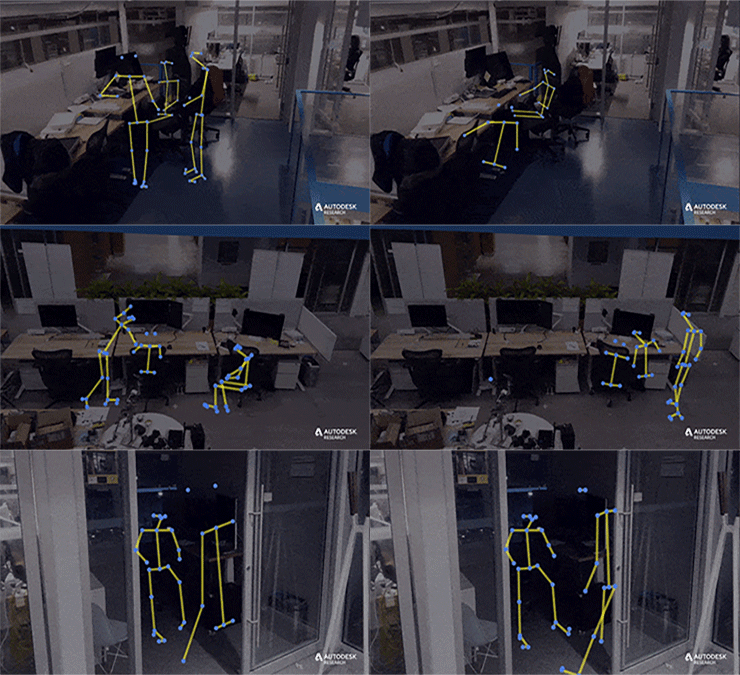
We investigated how office interior layouts influence the way we socially experience office buildings. Using the real-world vision data, we propose the concepts of socio-spatial comfort: social buffers, privacy buffers, and varying proxemics to inform a user-centered way of designing human building interactions and architecture.
Sekeltonographer: Skeleton-based Digital Ethnography Tool
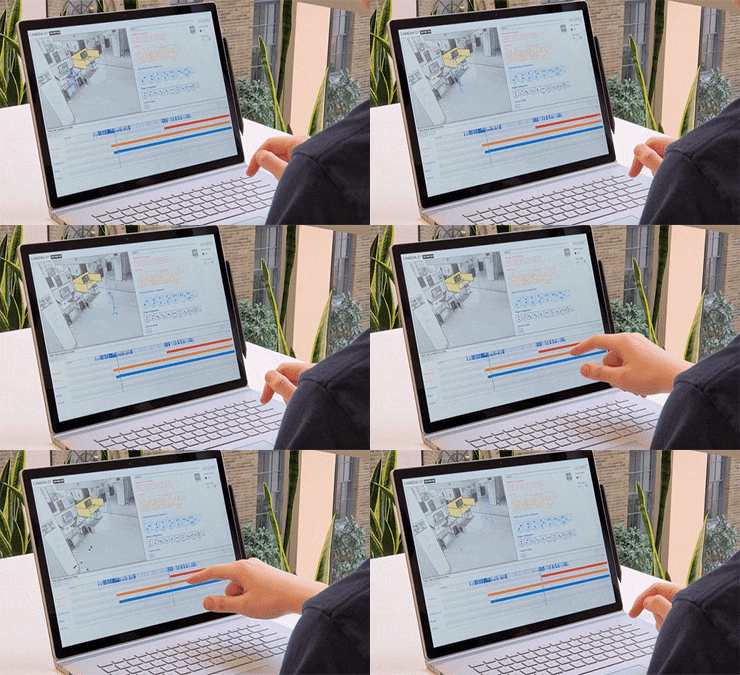
We designed a Skeletonographer is an online tool that supports digital ethnographic studies using anonymous skeletonized representations of human bodies. Users can play back and annotate skeleton data similar to a video analysis tool.
SmartManikin: Virtual Humans with Agency for Design Tools
We introduceSmartManikin, a mannequin with agency that responds to high-level commands and to real-time design changes. The SmartManikin's pose is generated by the predicted features as well as by using forward and inverse kinematics.
→ View all our works

RECENT NEWS
2018-09-04
→ View All News & Essays

Are you interested in joining our lab?

Explore more about our research vision, key interests, frequently used methodologies, and application process. We welcome highly motivated students eager to innovate and shape the future through design and technology. :)

→ Our Research Areas → Research Methods → Join Us → FAQ